
Here comes cooler weather, great food & color changing leaves!
World Suicide Prevention Day is September 10, 2025
World Suicide Prevention Day (WSPD) is organized by the International Association for Suicide Prevention (IASP). The purpose of this day is to raise awareness around the globe that suicide can be prevented.
Suicide
Key facts
- More than 720,000 people die due to suicide every year.
- Suicide is the third leading cause of death among 15–29-year-olds.
- Seventy-three per cent of global suicides occur in low- and middle-income countries.
- The reasons for suicide are multi-faceted, influenced by social, cultural, biological, psychological, and environmental factors present across the life-course.
- For every suicide there are many more people who attempt suicide. A prior suicide attempt is an important risk factor for suicide in the general population.
Overview
Every year 727,000 people take their own life and there are many more people who make suicide attempts. Every suicide is a tragedy that affects families, communities and entire countries and has long-lasting effects on the people left behind. Suicide occurs throughout the lifespan and was the third leading cause of death among 15–29-year-olds globally in 2021.
Suicide does not just occur in high-income countries but is a global phenomenon in all regions of the world. In fact, close to three quarters (73%) of global suicides occurred in low- and middle-income countries in 2021.
Suicide is a serious public health problem that requires a public health response. With timely, evidence-based and often low-cost interventions, suicides can be prevented. For national responses to be effective, a comprehensive multisectoral suicide prevention strategy is needed.
Who is at risk?
The link between suicide and mental disorders (in particular, depression and alcohol use disorders) and a previous suicide attempt is well established in high-income countries. However, many suicides happen impulsively in moments of crisis with a breakdown in the ability to deal with life stresses, such as financial problems, relationship disputes, or chronic pain and illness.
In addition, experiencing conflict, disaster, violence, abuse or loss and a sense of isolation are strongly associated with suicidal behavior. Suicide rates are also high among vulnerable groups who experience discrimination, such as refugees and migrants; indigenous peoples; lesbian, gay, bisexual, transgender, intersex (LGBTI) persons; and prisoners.
Prevention and control
There are several measures that can be taken at population, sub-population and individual levels to prevent suicide and self-harm. LIVE LIFE, WHO’s initiative for suicide prevention, recommends the following key effective evidence-based interventions:
- limit access to the means of suicide (e.g. pesticides, firearms, certain medications)
- interact with the media for responsible reporting of suicide
- foster socio-emotional life skills in adolescents
- early identify, assess, manage and follow up anyone who is affected by suicidal behaviors
These need to go hand-in-hand with the following foundational pillars: situation analysis, multisectoral collaboration, awareness raising, capacity building, financing, surveillance and monitoring and evaluation.
Suicide prevention efforts require coordination and collaboration among multiple sectors of society, including the health sector and other sectors such as education, labor, agriculture, business, justice, law, defense, politics and the media. These efforts must be comprehensive and integrated given the multifaceted nature of suicide.
Challenges and obstacles
Stigma and taboo
Stigma, particularly surrounding mental disorders and suicide, means many people thinking of taking their own life or who have attempted suicide are not seeking help and are therefore not getting the help they need. The prevention of suicide has not been adequately addressed due to a lack of awareness of suicide as a major public health problem and the taboo in many societies to openly discuss it. To date, only a few countries have included suicide prevention among their health priorities and only 38 countries report having a national suicide prevention strategy.
Raising community awareness and breaking down the taboo is important for countries to make progress in preventing suicide.
Help is available.
Dial 988 – Suicide and Crisis Lifeline

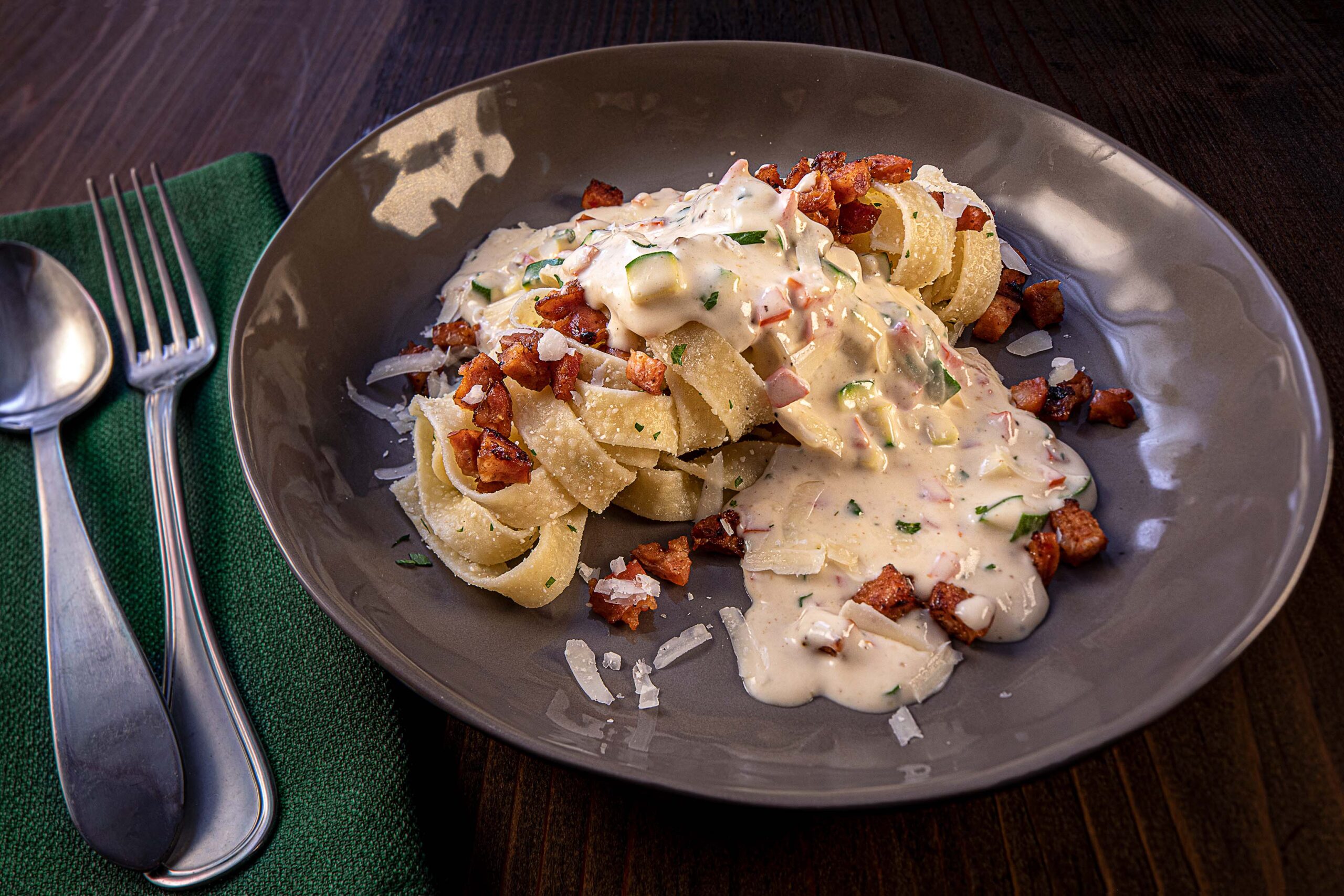
Florida Vegetable & Gator Sausage Alfredo
Ingredients
2 cups Florida alligator sausage, diced small
1 cup Florida zucchini, diced small
½ cup Florida bell pepper, diced small
1 pound pasta (such as linguini or fettuccine), cooked al dente
2 cups whole milk
1 cup Parmesan, grated
2 tablespoons all-purpose flour
1 tablespoon garlic, minced
1 tablespoon all-purpose seasoning (your favorite)
3 tablespoons unsalted butter
Sea salt and fresh ground pepper, to taste
Preparation
Preheat a large sauté pan to medium-high heat. Add enough butter and cook sausage, peppers and zucchini for 6 to 8 minutes. Add garlic and all-purpose seasoning and cook for additional minute. Sprinkle in flour and stir. Slowly pour in milk, stirring continuously. Bring to a boil and reduce to simmer for 5 minutes or until thickened. Season with salt and pepper. Toss mixture with cooked pasta and serve warm.
Fresh tip: Feel free to add your favorite seasonal Florida vegetables to this dish and/or omit meat to make this dish vegetarian friendly.
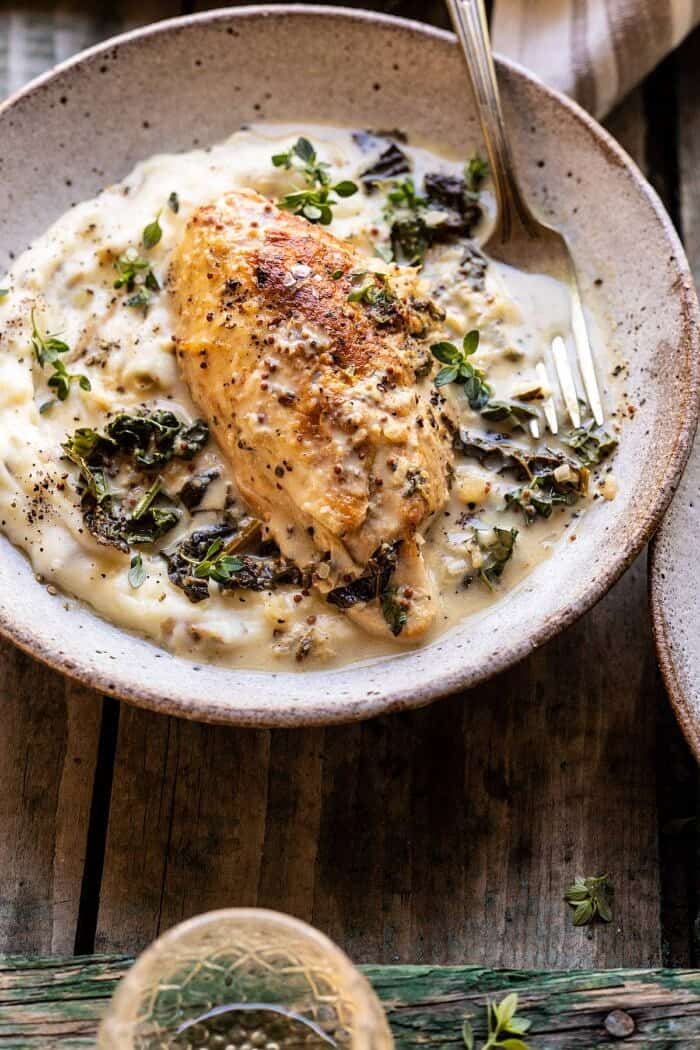
Slow Cooker French Wine & Mustard Chicken
Ingredients
1 cup dry white wine, such as Pinot Grigio or Sauvignon Blanc
1/3 cup heavy cream or canned full fat coconut milk
2 tablespoons Dijon mustard
2 tablespoons grainy Dijon mustard
2 shallots chopped
2 cloves garlic, minced or grated
kosher salt and pepper
2 pounds boneless chicken breasts, skin on or off
1 tablespoon extra-virgin olive oil
2 tablespoons fresh thyme leaves
1 tablespoon fresh chopped sage
2 tablespoons salted butter
1/3 cup freshly grated parmesan cheese
1/2 bunch kale, chopped
mashed potatoes or steamed rice, for serving
Instructions
Slow Cooker
1. In the bowl of your slow cooker, combine the wine, milk/cream, both mustards, shallots, garlic, and a pinch each of salt and pepper.
2. Rub the chicken with thyme, sage, and a pinch each of salt and pepper. Heat the olive oil in a large skillet over medium high heat. When the oil shimmers, add the chicken and sear until golden brown on both sides, about 3 minutes per side. Remove the chicken from the skillet and place directly into the slow cooker, skin side up, along with any juices left in the skillet. Add the butter.
3. Cover the slow cooker and cook on low for 4-6 hours or on high for 2-3 hours. During the last 30 minutes of cooking, add the parmesan and kale, gently tossing to combine.
4. Serve the chicken over mashed potatoes or rice and spoon the creamy mustard sauce over top the chicken. Serve with additional herbs and parmesan.
Instant Pot
1. In a small bowl, combine the wine, milk/cream, both mustards, shallots, garlic, and a pinch each of salt and pepper.
2. Rub the chicken with thyme, sage, and a pinch each of salt and pepper. Set the Instant Pot to sauté. Add the olive oil. When the oil shimmers, add the chicken and sear until golden brown on both sides, about 3 minutes per side. Pour in the wine/mustard sauce. Add the butter. Cover and cook on high pressure for 8 minutes.
3. Once done cooking, use the natural or quick release function. Set the Instant pot to sauté and add the parmesan and kale, gently tossing to combine. Cook 5 minutes.
4. Serve as directed above.
Stove Top
1. In a small bowl, combine the wine, milk/cream, both mustards, and a pinch each of salt and pepper.
2. Rub the chicken with thyme, sage, and a pinch each of salt and pepper. Heat the olive oil in a large skillet over medium high heat. When the oil shimmers, add the chicken and sear until golden brown on both sides, about 3 minutes per side. Add the shallots and garlic, cook another 3 minutes, until fragrant.
3. Reduce the heat to low, pour in the wine/mustard sauce. Cover and simmer for 15 minutes, or until the chicken is cooked through. Stir in the parmesan and kale, cooking another 3-5 minutes. If the sauce thickens too much, add additional wine or chicken broth to thin.
4. Serve as directed above.